Archiving in progress — some issues & articles may be temporarily unavailable
Off-Screen Menu
Caesurae:Poetics of Cultural Translation
ISSN 2454-9495 Open Access Peer Reviewed
Cover of Vol. 6, No. 2
Volume 6 · Number 2 · 2025

Vol. 6, No. 2

Published February 2026 20 articles

Editor's Note

Editorial

Dear Readers,


We have completed ten years of our journey! There have been times of bad weather, yet by the grace of some scholars who have lent support to the journal and the Caesurae Collective Society, we are looking forward to a brighter future! 


This Issue introduces a new chapter in the journal dedicated to ‘Indic Studies’. We are extremely grateful to stalwarts and young scholars who have come forward to join us in this venture. As there have been different approaches to this discipline by the Indian scholars and the Western scholars, this new chapter looks forward to engaging in interdisciplinary methodologies, to compare and contrast different kinds of research conducted in this area. We invite translations in this section, from the Indian Archive, from an insider to the culture. Someone who is not by birth an Indian, but in spirit is, is an insider. Sir  John Woodroffe was an insider, so was Carl Jung.

Yet someone who attempts to flatten the contours of the sacred signs, symbols and significations under the banner of Consciousness Studies is not! Say for example, Jeffrey Kripal’s book Kali’s Child (1995), based on his doctoral research, is not the material we are looking for. We are looking for “insiders”, who try to fathom our sages and their works from Indian Consciousness and Indian traditions. 


The ‘Interventions Section’, of this issue is on “Cultural Translation of Buddhism in Asia”, and we continue with this theme for the next issue as well. In these  conflicting times, Buddhism has taken on many directions. Keeping in mind that the essence of the Buddha nature is maitri, we intend to explore the tāttvic similarities in the two religions and other cultures, which share deities, upāsanās and sacred shrines as well. 


The Creative sections, namely ‘MANA’, ‘Translation Studies’, ‘Spring Rhythm’ and ‘Ekhphrases’ together have a rich fare to offer. There are some extremely sensitive contributions in MANA and these sections which I am sure will resonate with all of you. ‘Hill Cultures’ Section offers some interesting essays. We are looking forward to contributions from the western Himalayas, or the other hill cultures in India, for our next issue. 


Last but not the least, the ‘Special Feature’ of this issue is on the “Literature, Art, Architecture, Culture and Heritage of Rajasthan”. If you miss this section you will definitely miss a slice of our rich cultural history! There are some in depth research essays on stepwells, kavāds, folklore, texts and contexts.


We are open to receiving Book Reviews throughout the year. 


With these words, we invite the readers to a very enriching experience of surfing this issue of the journal. 


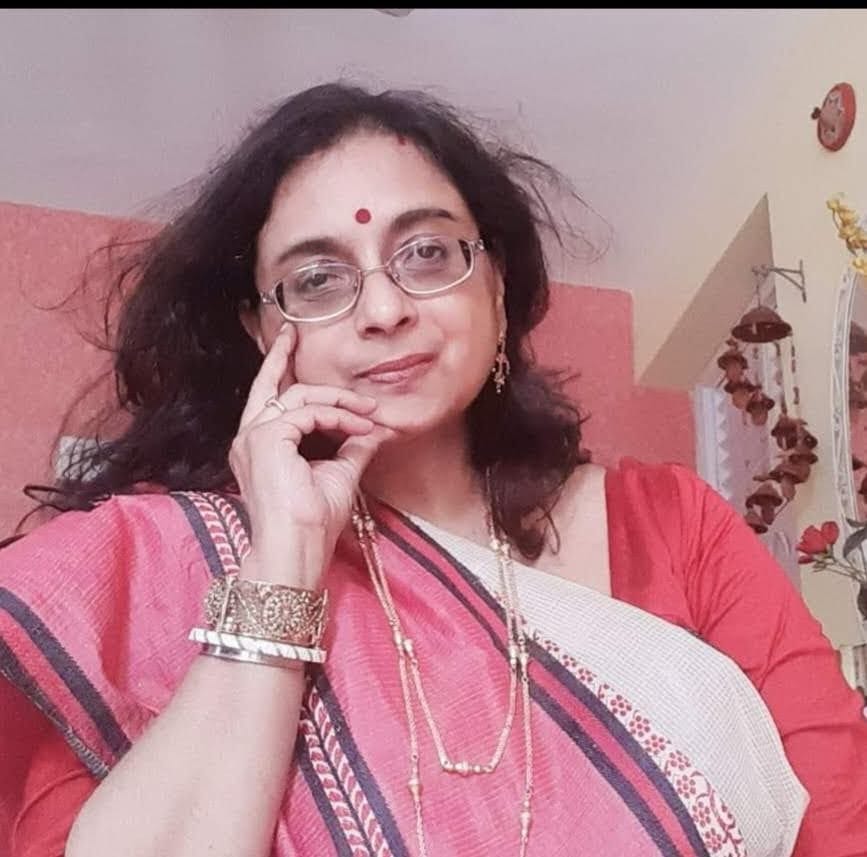
Jayita Sengupta is professor of English at Cooch Behar Panchanan Barma University, India. She was a British Council Fellow to do her doctoral research in UK in 2000, a Fulbright-Nehru Teaching Fellow at Stanford University, USA and a teaching fellow to National Kaosiung Normal University and Soochow University in Taiwan in 2013. As a member of the Society for Activities and Research on the Indian World (SARI), France, she has received travel grants for presentations at their Annual Colloquium several times. Her research interests include Gender, Cultures of Memory, Narrative and Translation Studies.

Indic Studies

Dr.Arghya Dipta Kar
Editor's Note
Dr.Arghya Dipta Kar Section Editor


 The Indic Studies Section of the Caesurae Journal, introduced from this issue, aims at promoting an academic interest and active engagement in the diverse religious cultures of the Indian subcontinent spread across the world. It intends to explore the multiple zones of cultural exchanges and negotiations that have contributed in the building of a rich and layered tapestry of religious doctrines, philosophical schools and spiritual disciplines that cover both the canonical textual tradition and also oral and cross cultural exchanges between Indian cultures and other cultures of the world. We welcome research articles and translation projects both by eminent researchers and also newly budding scholars in this area. The Indic Studies Section will contain two segments: 

1. Translations from the Indian Archive : English Translations of religious and literary texts from different Indian languages. 


  1. Critical Essays on Indic Studies 


In this issue (Vol 6:2) of the Caesurae Journal we include two such translated works from the Indian archive. Sampadananda Mishra’s translation of Vashishtha Ganapati Muni’s ‘Indrāṇī Saptaśatī’ is furnished with a brief introduction to Ganapati Muni, an illustrious disciple of Sri Ramana Maharshi. It is a poem in seven hundred verses invoking the power of the goddess Indrāṇī, the consort of the Vedic Caesurae: Poetics of Cultural Translation, Vol 6: 2 

ii 


god Indra, who here becomes synonymous with Śiva or Maheśvara in the Tantras. The Vedic goddess thereby gets equated with the Tantric Vajravairocanī. She is invoked to protect the land of India, to bless the afflicted country with peace, prosperity, knowledge, strength and power. Significantly, unlike as in the Purāṇas, Indrāṇī here is not the passive consort of a god constantly tormented, dethroned and imprisoned by the asuras, but the Supreme Mahāśakti herself who descends to the worlds to deliver all creatures. Like Durgā, Indrāṇī has been here described as having three eyes representing the three worlds. This illustrates Ganapati Muni’s attempt to redefine Hinduism though the revival of the Vedic religion. The poem by its tone and poetic flavour immediately reminds one of Sri Aurobindo’s Bhavānī Bhāratī

Ashok Kumar Mohapatra has translated excerpts from the Act III of Ūrvashi by Ramdhari Singh Dinkar. Inspired by Kalidāsa’s Sanskrit play titled Vikramorvaśīyam, Dinkar’s Ūrvashī narrates the love tale of the heavenly nymph Ūrvashī and her mortal lover Purūravā. The conversation between the two lovers pronounces the indomitable power of love and that of the human soul. The Kṣatriya king refuses to beg his love from Indra. He however is hopeful that the power of love is such that it can break all barriers. The text is provided with a translator’s note that explains how the play embodies a dramatic tension between desire and duty. While the king Purūravā embodies social obligations, the nymph symbolizes sensuality. The dialectic sustains itself through a tragic irresolution of the story as Indra claims back Ūrvashī. 

The Critical Essays segment of the Indic Studies includes five critical essays on varied areas of research interest. Diego Gonzalez-Rodriguez in his ‘From Neurocognitive and Computational Models to Śāstra and Paramparā: Exploring Categorical Translations Between Indic Darśanas and Cognitive Science’ begins his discussion on the nature of Consciousness by distinguishing between mind and consciousness, focussing on how disciplines such as cognitive neuroscience, evolutionary biology, and complexity science have left out of their scope a variety of non-physicalist ontologies by diminishing traditional knowledge systems alongside their phenomenological dimension. When it comes to issues pertaining to mental health, even though cognitive-behavioural therapy has gradually adopted certain non-Western practices, cognitive science as a whole has remained largely ignorant of the large body of Indic philosophies, overlooking their sophisticated accounts of consciousness, cognition, and identity. The primary focus has been the maintenance of the ego-self, whereas Indic systems aim at transcending the finite self and identifying with the expansive universal self. In Tantric systems particularly, this is achieved through ritual practices like the visualization of mantras and deities within the body. Tantric practices may lead to the deconstruction of self-referential cognitive constructs through active imagination, but also through embodied practices like puja, intended to reorient the individual's experience towards a more expansive, non-dual understanding of consciousness. Each particular stream of Indic philosophy achieves non-duality though its own exclusive approach. However, Western Caesurae: Poetics of Cultural Translation, Vol 6: 2 

iii 


theories inclined towards these concepts fail to grasp their subtle nuances and yield to over-simplification. A proper cultural translation goes beyond randomly borrowing exotic concepts from non-Western traditions. 

Prakash Joshi’s article titled ‘Becoming Esemplastic: Being and the Oneness of Consciousness(es) in the Early Upaniṣads’ explores the epistemological dimensions of Consciousness as in the philosophy of the Upaniṣads. He begins by distinguishing the subjective approach of the Upaniṣads from the objective one of psychoanalytical studies by highlighting the difference between consciousness on the one hand, and the mind-brain complex on the other. Following Advaita Vedānta, he arrives at the concept of ‘cinmātra’ or ‘pure consciousness’ which is self-illuminating or ‘sva-prakāśa’. This verily is the Self which is the same as Brahman or the Absolute. The article highlights the esemplastic nature of all creation as everything emerges from oneness and merges back into it. The worldview that proceeds from the Upaniṣadic theory of Creation gets its ultimate base in the esemplastic notion and concept of the oneness of the manifest and the unmanifest cosmic phenomena. The author then proceeds forth to explain the triadic nature of the Mantra Aum embodying the three states of consciousness: waking, dreaming and deep sleep. Beyond this triad is the transcendental ‘Fourth’ or the ‘Turīya’ state where the Self rests within the Self. 

Bhushita Vasistha’s ‘Must We Imagine Sītā Unhappy?’ re-addresses the contemporary readings of Sītā as a victim of patriarchy. Moving aside from canonical versions of the narrative of Sītā, Vasistha highlights folk accounts that depict her as growing up amongst Vedic scholars. She is exposed to the two-fold ethics of the Truth – one seeking renunciation and the other a life of a wise-householder. Sītā chooses the latter; since she comes to recognize that the sophisticated philosophical discussions within the palace rests upon the unseen labour of farmers who cultivate food and women who transform it into nourishment. Her own life can be read as a reconciliation of this ethical binary. The author then explores Sītā’s ethically enlightened humane character, and even juxtaposes her ethical stands against Rāma’s mindlessly aggressive nature. She ultimately turns into an “elite outcast”, who once posited at the nucleus of the power structure is eventually banished for being vocal about the critique of the regime. 

Subhrajyoti Samanta’s essay ‘Studying Yoga Sūtras through Naruto’ is on the commodification of Indian philosophy in the technological era. It focuses on the Japanese animated series - Naruto, written and illustrated by Masashi Kishimoto. He connects the key concepts of the Yoga Sūtras of Patañjali with Kishimoto’s Narutoverse. Samanta’s essay undertakes the content as well as context analysis of the series to unravel how the Narutoverse incorporates the “Astanga Yoga” approach. He points out that such cultural translation not only commodifies the ancient philosophy through its seductive narrative but such repackaging of classical cultural information is part of a new pop culture Caesurae: Poetics of Cultural Translation, Vol 6: 2 

iv 


narrative. While such yogic principles span the spiritual wisdom of the Asian countries, the age of technology uses the anime to familiarize the younger generation with the same. 

Deep Saha’s article ‘The Gamira Mask Dance Performance and the Spiritual Aesthetics of Consciousness’ explores the transporting potential of this mask dance in North Bengal, particularly South Dinajpur, through which the performers connect with the Divine or the spirits to whom they dedicate their masks. Saha explores through the theory of Rasas, how the performance induces a state of trance in which the individual self of the performer merges with the divinity represented through the mask. He also points out how the shared experience of the performance transcends the individual psychic spaces of the performers and the audiences. Within the zone of ecstasy, one’s body is not solely one’s own, but an interdependent sharing with all other bodies and therefore, a common collective participation in God’s body. In this process, such a contemplative performance could be described as a semantic journey through which God’s body is realized by encompassing the performer’s body. 

The essays address various issues related to Indic studies from various perspectives. The first three essays, together analyse various concepts, texts and contexts and their contemporary relevance . The last essay writes about a folk dance performance where masks play a significant role to play as a trope to self-realization. In sum, all the essays discuss the idea of ‘consciousness’ differently and we sincerely hope, together the essays and the translations from the Indian Archive would offer a thought provoking readership. 

He is a professional painter and academic. He completed his doctoral research at Jamia Millia Islamia, New Delhi, on comparative religion, and has several research publications on Tantra and is on the editorial board of an international journal on Indic Studies in USA. He teaches English Literature in a college affiliated to Calcutta University.
Prayers by Ganapati Muni for the Protection of Mother India

Compiled from इन्द्राणी सप्तशती Indrāṇī Saptaśatī composed by Vasishtha Ganapati Muni

Dr. Sampadananda Mishra1
1Director of the Centre for Human Sciences, Rishihood University

Vasishtha Ganapati Muni (1878–1936) was the first and foremost disciple of Bhagavan Ramana Maharshi (1879–1950). He was a mighty spiritual personality with a vast knowledge of Sanskrit and the whole tradition therein. A yogi, poet, philosopher, critic, scholar…

Ganapati Muni Mother India Indic Studies Sanskrit Translation Vedic Hymns
PDF
pp. 9–26
Read →

Excerpt from Ūrvashi by Ramdhari Singh Dinkar

Translated from the Hindi original by Professor (Dr.) Ashok Kumar Mohapatra

Professor Ashok Mohapatra1
1Sambalpur University

Ramdhari Singh Dinkar (1908-974), doyen of Hindi Literature, was the recipient of the Jnānapith Award in 1973 for the magnum opus and classic Ūrvashi, a poetic play in five acts. It is an adaptation of the Vedic story. The above excerpt is from Act III, a poe…

Ūrvashi Purūravā Purushārtha poetic play.
PDF
pp. 27–33
Read →

Becoming Esemplastic: Being and the Oneness of Consciousness(es) in Early Upaniṣads

Prof. (Dr.) Prakash Joshi1
1Professor in the Department of English, University of Allahabad

There can be two ways of analysing consciousness depending on what view of it one takes. One of the two ways would be the objective way, which is almost a ‘surgical’ way, treating consciousness as an external object to study; and the other would be a subjectiv…

Upaniṣad Advaita Vedānta svaprakāśa Brahman Turīya
PDF
pp. 34–43
Read →

From neurocognitive and computational models to śāstra and paramparā

Exploring categorical translations between Indic darśanas and cognitive science

Diego Gonzalez-Rodriguez1
1Professor, Universidad Camilo José Cela (UCJC)

Cognitive science has historically explored how information is processed in both biological and artificial systems. By focusing on functional and structural aspects of cognition, it has given rise to a variety of paradigms to study cognitive processes, gener…

cognitive science śāstra indic knowledge systems cognition consciousness studies
PDF
pp. 44–58
Read →

Must We Imagine Sītā Happy?

Bhushita Vasistha

Bhushita Vasistha1
1Independent Researcher

This paper examines the phenomenon of “elite outcasts” within utopian frameworks through a comparative analysis of Sītā, Oscar Wilde, and Leon Trotsky—figures who occupied the nucleus of power before their eventual banishment. Unlike subaltern dissenters, thes…

Reproductive Labor Restorative Justice Elite Outcasts Sītā Myth of Sisyphus
PDF
pp. 59–74
Read →

Studying Yoga Sūtras through Naruto

Subhrajit Samanta

Subhrajit Samanta1
1Research Scholar, Cooch Behar Panchananan Barma University

Japanese anime in the modern times communicate cross-cultural information exchange of interreligious discourses (Minea 91-103). This propagates mutual appreciation and respect across heterogeneous religious practices emphasizing the need to analyze and rationa…

Yoga Sūtras chakra pop culture collective unconscious Narutoverse
PDF
pp. 75–95
Read →

The Gamira Mask Dance Performance and the Spiritual Aesthetics of Consciousness

Deep Saha

Deep Saha1
1Independent Researcher

This paper interrogates the complex interplay between art, spirituality, and consciousness through an in-depth exploration of the Gamira mask dance performance, - a traditional folk performance of South Dinajpur. Art is admired not merely as a form of aestheti…

Mask Consciousness Spirituality Transcendence Transformation
PDF
pp. 96–106
Read →

Interventions

Prof. Godavarisha Mishra
Editor's Note
Prof. Godavarisha Mishra Section Editor


 This inaugural section of the Caesurae Journal (Vol 6:2), presents a rich confluence of writings on literature, history, and the spiritual traditions of Buddhism, exploring how culture, faith, and art transcend time and space to shape the human spirit. We would continue on this theme for the forthcoming 2016 (Vol 7:1) of the Journal as well, as we hope to publish more research essays on this area. 

In this issue, we feature three articles that relate to and explore Buddhist thought. Medha Sinha’s article, “In the Light of the Padas: Exploring Sexuality as a Means of Spiritual Interventions Section, Caesurae: Poetics of Cultural Translation, Vol 6: 2 


Transcendence from Caryāpadas to Vaiṣṇava Padāvalī,” investigates mystical songs of realization within Vajrayāna and Sahajiyā Buddhism and their transformation into Vaishnava devotional poetry. Tracing texts like the Caryācharyāviniścaya, Sri Kṛṣṇa Kīrtan, and Gītagovinda, she uncovers the shared symbolism of love and divine union that unites Buddhist and Hindu devotional poetics in greater Bengal and neighbouring states like Bihar, Odisha, and Assam. 

The second article by Tathagata Sagar Pal’s “Understanding the ‘Wrathful Compassion’: A Reflection upon the Narratives and Forms of Yamāntaka” explores karuṇā (compassion) as the cornerstone of Mahāyāna thought. Through the figure of Yamāntaka—the wrathful form of Mañjuśrī, Pal reveals how compassion can assume fierce forms to annihilate ignorance and suffering, demonstrating that wrath and wisdom converge in the Bodhisattva’s vow to liberate all beings. Drawing from canonical sources and iconographic representations, Pal argues that Yamāntaka’s wrath embodies the protective and transformative aspect of compassion itself—destroying ignorance and inner afflictions to guide beings toward enlightenment - thereby illustrating how wrathful compassion extends the Mahāyāna ideal of universal salvation. 

The issue concludes with “Transcending Power and Politics: Buddhism as a Foundation of Universal Peace and Harmony” by Godabarisha Mishra (yours truly). The essay examines Buddhist ethical and philosophical framework as a path toward universal peace. Drawing upon doctrines such as Ariya Sacca, Paṭicca-samuppāda, and Brahmavihāras, the essay argues that Buddhism offers not only an alternative to political and militaristic models of peace but also a profound vision for restoring harmony, within the self and across humanity. 

We hope this issue continues to inspire our readers, reaffirming faith in compassion, reflection, and the enduring human quest for peace. 

Godabarisha Mishra is a Professor and Dean of the School of Buddhist Studies, Philosophy, and Comparative Religion at the Nalanda University, Rajgir, India. He served as a Visiting Professor in the School of Humanities and Social Sciences at the IIT, Bhubaneswar, from 2018 to 22. Formerly, he also worked as the Chairman of the School of Philosophy and Religious Thought, as well as the Professor and Head of the Department of Philosophy, University of Madras. He was the Editor at the Kuppuswami Sastri Research Institute, Chennai, from 1985 to 1988, and was also the Member Secretary of the Indian Council of Philosophical Research, New Delhi, from 2007 to 2011. His primary areas of specialization are Vedanta and Buddhism, with a focus on the classical and textual traditions. He has published over fifty research papers on Classical and Contemporary Indian Thought, Comparative Philosophy, and authored Numerous review articles, as well as five books.

In the Light of the Padas: Exploring Sexuality as a Means of Spiritual Transcendence

by Medha Sinha

Medha Sinha1
1Independent Researcher

The Caryāpadas are a collection of mystical poems, songs of realization in the Vajrayāna and Sahājiya traditions of Buddhism from the esoteric traditions in Assam, Bengal, Bihar and Odisha. Vaiṣṇava Padāvalī refers to Vaiṣṇava poetry and often focusses on the …

Caryāpadas Vaiṣṇava Padāvalīs Esoteric lore Sahajiyā traditions non-normative sexuality
PDF
pp. 109–117
Read →

Understanding the ‘Wrathful Compassion’: A Reflection upon the Narratives and Forms of Yamāntaka

by Tathagata Sagar Pal

Tathagata Sagar Pal1
1Senior Research Fellow, Cooch Behar Panchanan Barma University

Karuṇā (compassion) is one of the important cornerstones of the Mahāyāna consciousness. According to the Buddhist tradition, the Buddha not only has the wisdom of insight into the state of things but also the compassion for all suffering sentient beings. The e…

compassion wrathfulness Vajrayāna demonic exploits
PDF
pp. 118–133
Read →

Transcending Power and Politics: Buddhism as a Foundation of Universal Peace and Harmony

by Godabarisha Mishra

Godabarisha Mishra1
1Professor and Dean, School of Buddhist Studies, Philosophy and Comparative Religion, Nalanda University, Rajgir, Bihar.

Peace and harmony, like health at the individual level, are essential conditions for collective well-being at the social, national, and international levels. While advances in medical science continually strive to alleviate physical suffering, similar efforts …

Buddhism peace harmony conflict-resolution imperialism
PDF
pp. 134–148
Read →

Hill Cultures

Prof. Prakash Joshi
Editor's Note
Prof. Prakash Joshi Section Editor


 Music, fastidious grammarians aver, should be treated as an uncountable noun. And it is largely so! But should the people who know a thing or two or more about mountain music accept the diktat of those grammarians? No, perhaps. Mountains have musics of their own. The trees play, the brooks sing, the breezes flowing in many directions intone, and there is the orchestration of birds and animals, separately and together. One would call them the ‘musics’ of mountains. But that is not the end of the repertoire of mountain ‘musics’. There could be and are many more ‘musics’ belonging to mountains, heard and even unheard. There are those ‘musics’ too, that the humans dwelling in mountains for generations have been making; and they are the ‘musics’ of varying kinds, inspired and enlivened by the several and various ‘musics’ of mountains. And we would call and identify them, a little differently, as the ‘musics’ in mountains. These ‘musics’ in mountains replicate, in several subtle ways, the ‘musics’ of mountains. 

Thinking and writing in the context of the entire extended family of the mountain ranges of the Himalayas, stretching from almost beyond Afghanistan in the west to deep inside Myanmar in the east, the number of musics in mountains is so huge that any inclusive study of those musics can fill the pages of a series of volumes on Himalayan musicology. Himalayan musics too alter, as the ii 


geographies and the terrains and the cultures and the languages alter along that stretch across a big part of the Asian continent from the west to the east. 

The Hill Cultures section of this issue of Caesurae: Poetics of Cultural Translation (Vol 6:2) has Musics of the Himalayas as its broad theme. The feature essay in the section brings to us an in-depth glimpse of the varieties of traditional music created and majorly practiced by a group of the communities of people belonging to and living in the regions of Sikkim, Darjeeling and Kalimpong, which are the regions right at the start of Eastern Himalayas moving west to east. Written by Nishaant Singh, the essay makes a close analysis of the nuances of the music of Shreemadal, a traditional percussion instrument, and its symbiotically central role in Mandalay Geet (a family of folk songs) and in Maaruni Naach (a form of folk dance). The essay by Sachin Limbu is another piece located in the same geographical region of Eastern Himalayas. The essay doesn’t directly concern the theme of music. Titled “Revisiting Priesthood System of Limbu Community”, the essay analyses the core religious-cultural practices of the people of Limbu community in the region. That core, as the essay explains, has its ultimate source of inspiration and interpretation in the Mundhum, which contains the philosophical foundations of the practices of Limbu communities and which has travelled from generation to generation in oral form, basically rhyming and poetic in character. Music, thus, is an essential constituent element of the Mundhum and all that it envisages and communicates. The third piece in the section is a short essay by Lincoln Murasingh, titled “Rhythms of Tripura Hills”; and it explains the major dances of the indigenous community of Tripuri people living in the tiny eastern Himalayan state of Tripura bordering Bangladesh on the east. 

We do hope that the essays in the section add much to our understanding of the musics in mountains. 

Dr. Prakash Joshi is Professor in the Department of English, University of Allahabad.

Feature Essay - Shreemaadal, Maadalay Geet, Maaruni Naach: The Prime Music of Hills Practised in the Regions of Sikkim, Darjeeling, Kalimpong

by Nishaant Singh

Nishaant Singh1
1Belur Math, Ramakrishna Mission, Howrah, West Bengal

This essay explores the vibrant and culturally significant folk music traditions of the Indian Himalayan region, with a focus on Sikkim, Darjeeling, and Kalimpong. Central to this study are three key elements of Indian Nepali folk heritage: Shreemaadal, Maadal…

Shreemaadal Maadalay Geet Maaruni Naach Indian Nepali Folk Music Himalayan Musical Traditions.
PDF
pp. 151–161
Read →

Revisiting Priesthood System of Limbu Community: Structure, Practices and Relevance of Pegi Fangsam/ Murabang

by Sachin Limbu

Sachin Limbu1
1Sikkim Manipal University

Limbus are one of the major tribes residing in the hills of Darjeeling and Kalimpong, Sikkim, Eastern Nepal and other parts of Northeastern states of India. They worship ancestors, nature and various deities. They call their religion ‘Yumaism’ or ‘Yuma Samyo’ …

Limbu Mundhum Priesthood system Pegi Fangsam Murabang.
PDF
pp. 162–172
Read →

Rhythms of Tripura Hills: The Vibrant Folk Dances of the Tiprasa (Tripuri) People

by Lincoln Murasingh

Lincoln Murasingh1
1“Eh-huhu” a Kokborok literary organization

This essay writes about the various Tripuri folk dances. The rhythm of the jhum cycle is reflected through the various folk dances of different tribes in Tiprasa or Tripura. Mosok Sulmani is a tribal dance for hunting. In sum, the essay is about folk art repre…

huk borok Tiprasa
PDF
pp. 173–176
Read →

Special Feature

Dr. Praveen Mirdha and Dr. Divya Joshi
Editors Note
Dr. Praveen Mirdha and Dr. Divya Joshi Section Editors


 Monsoon arrives in Rajasthan with certain cultural signatures and finds its rhythm in music, songs, stories and popular culture of the state, each a reflection of how the season lives on in the folklore and oral traditions of Rajasthan. Monsoon celebrates nature’s abundance and the season’s essence has been timelessly captured, preserved and celebrated through art and architecture, literature and miniatures of the region, all echoing the sound and soul of the showers. While the water level rises in the stepwells connecting nature, divinity and 

ii 


abundance during the rainy season, the ecology of Rajasthan rooted in its cultural heritage finds expression through folk arts steeped in local language and idiom. 

Here and now, the arid landscape of Rajasthan is awash with freshly breathed monsoon showers which bring relief to the parched sand dunes ushering in cultural vibrancy inspired through the celebration of folk traditions and festivity. As the life-affirming rhythm of the rains signal the approach of festivities and celebration with swings swaying the desert in joy, we feel pleased to place before you the special feature ‘Literature, Art, Architecture, Culture and Heritage of Rajasthan’ of the Caesurae: Poetics of Cultural Translation Volume 6:2, July 2025 issue. We hope all the articles in this issue will open up possibilities for a participatory cultural space to reinterpret and revive the remote voices from the cultural heritage of Rajasthan and secure wider circulation for its oral traditions. 

Dr. Praveen Mirdha is Professor in the Department of English, Government Girls’ College, Ajmer, Rajasthan. She has published widely and has been invited as an academic to national and international conferences.

Professor Divya Joshi is Professor and Head of the Department of English at Govt. Dungar College, Bikaner, Rajasthan. An academic per se, she has published widely, and she is also a poet and translator. She has organized many academic and creative forums including the Caesurae International Conference in the Bikaner Palace, which was inaugurated by the princess herself in 2019.

Special Feature: ‘Literature, Art, Architecture, Culture and Heritage of Rajasthan’

by Praveen Mirdha and Divya Joshi

Praveen Mirdha1, Divya Joshi2
1Government Girls' College, Ajmer, Rajasthan 2Govt. Dungar College, Bikaner, Rajasthan

Monsoon arrives in Rajasthan with certain cultural signatures and finds its rhythm in music, songs, stories and popular culture of the state, each a reflection of how the season lives on in the folklore and oral traditions of Rajasthan. Monsoon celebrates natu…

stories art culture architecture Rajasthan
PDF
pp. 179–180
Read →

Stepwells as Cultural Texts: Decoding the Architectural Narratives of the Historical Baories/ Stepwells of Rajasthan

by Kiran Deep

Kiran Deep1
1Ch. Balluram Godara Govt. Girls College, Sriganganagar (Rajasthan).

Every work of art, whether it is a poem, a story, a painting, a song, a sculpture, an embroidered costume or a building is shaped by the culture where it is situated in spatial and temporal terms and it also plays a formative role in the cultural life of the s…

Historical Stepwells Baories Architectural Language Cultural Text
PDF
pp. 181–192
Read →

Folklore, Social Constructs and Gender in Vijaydan Detha's “Double Lives”

by Dr Shruti Rawal

Dr Shruti Rawal1
1St. Xavier’s College, Jaipur.

Folklore, as an organic repository of indigenous knowledge, resists the Western critical hegemonies that focus on fixed textuality and prioritises community epistemologies over individual authorship. This research attempts to understand the social constructs t…

Folklore Rajasthani literature society women.
PDF
pp. 193–204
Read →

Between Tradition and Transgression: A Feminist Rewriting of Vijaydan Detha’s “Duvidha” in the Cinematic Spectacle of Amol Palekar’s Paheli

by Rajni

Rajni1
1Government College, Bali in Rajasthan.

This paper attempts to examine how Amol Palekar’s Paheli adapts Vijaydan Detha’s folktale “Duvidha” from a feminist perspective. Detha, while collecting oral narratives from women in rural Rajasthan, often reworked them. Among his most renowned stories, “Duvid…

Adaptation Cinema Folklore Feminist retelling.
PDF
pp. 204–215
Read →

Kaavad: The Verbal Visual Narrative of Rajasthan

by Dr. Santosh Kanwar Shekhawat

Dr. Santosh Kanwar Shekhawat1
1Maharaja Ganga Singh University, Bikaner

Rajasthan houses a rich treasure of oral narratives. Some of these oral narratives contain accompanying visuals, such as paintings, performances or puppets. As a popular verbal visual narrative of Rajasthan, Kaavad is a text and performance that lends itself t…

Kaavad oral narrative panels performative art pictorial representation
PDF
pp. 216–227
Read →

Reflections on Chivalry and Sagacity in Rajasthani Folklore and Culture with Special Reference to Laxmi Kumari Chundawat’s Ke Re Chakwa Vaat

by Dr. Alka Bhakar Jhajhria

Dr. Alka Bhakar Jhajhria1
1Maharaja Ganga Singh University, Bikaner

Rajasthani folklore is a vibrant and intricate tapestry that weaves together the cultural, historical, and social fabric of Rajasthan. Rani Laxmi Kumari Chundawat was a prominent author and politician known for her contribution to Rajasthani literature and cul…

Chivalry culture folktale Rajasthan tradition
PDF
pp. 228–230
Read →

Review Article

by Dr. Praveen Mirdha

Dr. Praveen Mirdha1
1Government Girls’ College, Ajmer, Rajasthan, India

In Rajasthan, the traditional art forms are windows to the land’s diverse culture and history. Each region reflects its own history, beliefs and ways of life contributing to the rich mosaic of Rajasthani art and culture. From the vibrant Phad paintings and min…

Rajasthan traditional art folk tales havelis miniature paintings
PDF
pp. 231–235
Read →